
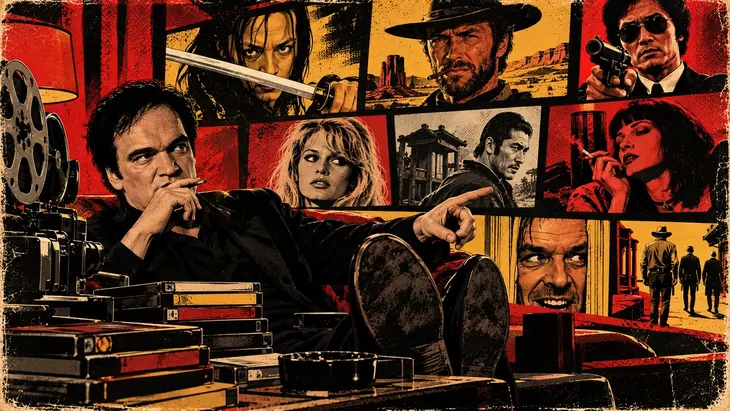
The movies Quentin Tarantino recommends can spark curiosity for different reasons: a story he considers memorable, a performance he champions, or an ending that left him with a powerful feeling. Keeping those reasons in view makes it easier to understand his enthusiasm and decide what to look for in each film.
There is a difference between choosing a movie for a poll and writing a review of it. The first decision records a preference within a set of rules; the second leaves room to develop arguments, raise objections, and compare results. A favorable assessment can be very specific and still coexist with reservations about other aspects of the same title.
When the judgment is expressed also matters. Remembering a movie years later because it stayed in memory is not the same as selecting it among the releases seen during a season. The recommendations attributed to Tarantino are more interesting when that connection to their moment and purpose is preserved. Examples from polls, written criticism, and public conversations make it possible to appreciate the range of his tastes without turning separate comments into a final ranking.
A selection keeps its meaning better when it answers three questions: which movie is being judged, where the comment appears, and what its author is choosing. With that information, it becomes possible to distinguish a documented preference from an association suggested by another viewer.
Polls, seasons, and decades
The BFI confirms that Tarantino included Rolling Thunder, by John Flynn, in his vote for the Sight and Sound 2012 poll. It is a verifiable example among the movies Tarantino chose for Sight and Sound. The presence of the title confirms that choice; by itself, it does not establish that it was ranked first or allow the rest of his ballot to be reconstructed. The combined result of a poll also does not reproduce each participant's personal order.
The annual lists of Tarantino's favorite movies raise a narrower comparison. To understand a seasonal selection, you have to keep the year it belongs to and the moment it was made public. A provisional list may come before later releases; a missing movie may simply not have been seen yet. An omission does not prove rejection, and an annual choice does not require the same preference to last a lifetime.
Grouping by decade reflects another perspective. The introduction to Cinema Speculation, published in 2022, presents a book that combines memories and criticism around 1970s American cinema. That framework helps place the 1970s movies recommended by Tarantino. Personal memory can explain what he found in a film when he first discovered it; an essay makes it possible to revisit it with arguments longer than a list of titles.
Reviews with praise and objections
In his review of American Graffiti, published by the New Beverly on June 29, 2022, Tarantino praises the blend of nostalgia, characters, and radio that George Lucas builds. The same text questions one passage and one casting decision. That mix of enthusiasm and reservations offers a more nuanced recommendation than simply including the movie on a favorites list.
A byline also does not guarantee enthusiastic praise. On the New Beverly mini-review page published on July 26, 2022, the comment on Trackdown signed by Tarantino ends with a C+ rating. The example reminds us that writing about a movie and recommending it without reservations are different actions. In addition, that page brings together texts with different signatures: the authorship of each entry determines who the judgment belongs to, even if all of them share the same section.
Reservations can also clarify which aspect sustains the interest: a performance, the energy of a scene, or the relationship between music and images. When the discussion moves from one work to the filmmakers and actors Tarantino admires, it is worth keeping that scale in mind. A favorable comment about one role shows what he values in that performance. Extending that praise to an entire career requires a statement that truly covers that whole span.
Retrospective enthusiasm and emotional response
Comments on Toy Story 3 provide another case. Entertainment Weekly reported on August 28, 2024, a conversation between Tarantino and Bill Maher on Club Random, where he praised its emotional effect as the closing chapter of the first three installments. It is a specific reference for the animated films recommended by Tarantino. The comment documents a retrospective appreciation; that date does not make it an annual release list.
In a judgment like this, the effect of the ending carries particular weight. The emotion may depend on the accumulated relationship with the characters and on the feeling of farewell. The praise shows what response the viewer is describing, but it does not promise that everyone will react the same way. Judging a personal experience and explaining how a movie builds its ending invite different questions.
The genre-based recommendations from Tarantino make it possible to gather other interests without reducing them to a single measure. A comedy may be valued for the timing of its encounters, and a thriller for the pressure it keeps on the viewer. Comparing those reasons is more productive than assuming that all titles are competing for the same spot. The affinity a movie awakens can open a conversation, even when the next viewing leads to a different judgment.
The moment you read a review can change the experience of first watching the film. A detailed comment usually explains encounters, twists, or endings to support its argument. If you prefer to keep the surprise, you can start by identifying the movie and return to the analysis once you know the story.
After watching, comparison makes it possible to separate what was actually perceived from what was expected. One praised scene may have gone unnoticed; another, barely mentioned, may have drawn all the attention. Returning to those moments helps you discuss a judgment with concrete examples, without requiring a critic's enthusiasm to be reproduced automatically.
Disagreement can also be precise. You can recognize the clarity of the staging and still feel distant from the characters, or enjoy a performance within an uneven story. Reading Tarantino's opinions after forming an initial impression encourages that exchange: his arguments add a perspective that the viewer can examine, partially accept, or discuss from their own experience.