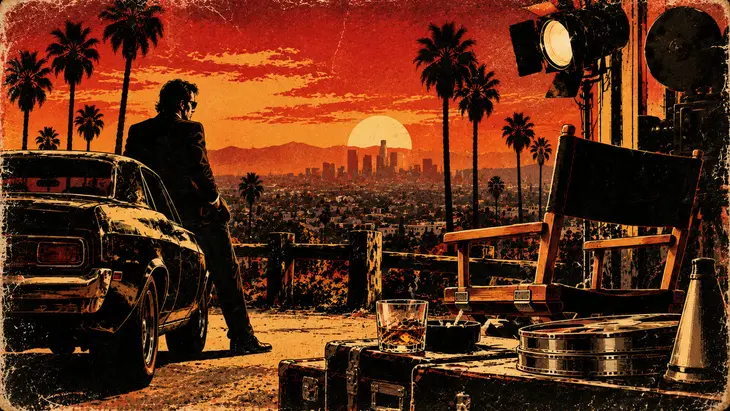
Quentin Tarantino’s style can be seen in how information is distributed. In a scene, we can hear what the characters say, watch their gestures and recognize a danger that one of them is still unaware of. Dialogue, framing and sound work together to determine when a threat becomes visible or how long it takes for a response to come.
These techniques serve different purposes in different films. An enclosed space can foster intimacy or prevent escape. A song can belong to the place where the action unfolds or accompany it from outside. Time jumps can hold back an explanation until later, while a long scene makes us live with uncertainty. Recognizing the technique is the beginning of analysis; what matters is explaining what it produces in that context.
It is also worth distinguishing formal choices from fictional connections between works. A repeated surname, a brand or a resemblance between characters raises questions of continuity and evidence. By contrast, two sequences can share a way of framing a shot without belonging to the same world. This distinction makes it possible to study both storytelling and cinematic references without turning every resemblance into a confirmed connection.
A conversation can become an action scene if it changes who has control. In Tarantino’s films, viewers often hear seemingly trivial words while assessing a risk. The length of the exchange and the information available both contribute to this effect.
How do dialogue and timing turn a conversation into suspense?
In Reservoir Dogs, the members of the group need to piece together what happened after a robbery. In Inglourious Basterds, speaking a language or maintaining an identity can determine the outcome of an encounter. Tarantino’s dialogue and narrative structure combine what is expressed with what is concealed. A polite question can serve as a test; a lengthy answer can buy time. Tension arises from the gap between the conversation’s literal meaning and what is at stake.
The order of events adds another variable. Pulp Fiction arranges episodes so that a later appearance in the edit does not necessarily happen later in the story. This shift affects the viewer’s expectations. Chapters, flashbacks and interruptions can hold back information or change an earlier impression. Their value depends on what the audience discovers at each moment, rather than on how difficult it is to piece together a chronology.
The performances bring this design to life. A pause, deliberate pronunciation or overly quick response changes how much a character inspires trust. Tarantino’s direction of actors and cast preparation make it possible to examine how this behaviour is constructed without attributing every gesture to a spontaneous impulse. The screenplay, acting and editing all contribute to the result, and only production sources can clarify the origin of a particular choice.
What do framing and sound do to our attention?
The camera’s position distributes information: it can show the person speaking while also revealing someone else’s reaction. In The Hateful Eight, the frame’s horizontal width is paired with an enclosed interior. Panavision documents the use of its Ultra Panavision 70 system in the film. Tarantino’s cinematography and visual techniques explore how this space makes it possible to relate figures and distances; the format alone cannot explain the suspense if we ignore where the characters are.
Camera movement should also be distinguished from an optical change. Physically moving closer to a figure changes the spatial relationships; a zoom changes the framing from the camera’s position. Editing then determines how long each view lasts and when to replace it. So recognizing a striking image in isolation is not enough to explain a sequence: we must consider the image that comes before it, the cut and the reaction that follows.
Tarantino’s music and sound help shape another part of that attention. In Reservoir Dogs, the radio brings songs and a radio host’s voice into the characters’ surroundings. At other times, a piece of music accompanies the action without the characters hearing it. This difference changes the relationship between the scene and the viewer. Footsteps, engines and silences matter too: sound can announce something off-screen or make a wait perceptible without explaining it in words.
Does a cinematic reference prove that films share a universe?
Kill Bill combines elements of martial arts films, Westerns and animation. Tarantino’s genres and cinematic homages can be recognized in conventions that change with the context: the duel, the training or the introduction of an adversary. A critical comparison can describe similarities between works; a stated influence requires an attributable source. Tarantino’s love of cinema offers his comments on other films, which should be distinguished from the interpretations of those who analyse his work.
The connections, brands and theories surrounding Tarantino’s universe raise a different question. The repeated appearance of a name may be verifiable on screen, but a family relationship or historical continuity requires additional evidence. Likewise, sharing an actor does not make two characters the same person. Keeping visible facts, statements and hypotheses separate makes it possible to discuss a connection without presenting it as an established part of the fiction.
The language version can change how a scene is perceived. Dubbing adapts voices and phrases into another language, while subtitles condense what is said so viewers can read it. In a film where an accent or hesitation is part of the conflict, hearing the original performance adds information that a transcript may not preserve. That does not make a translation an error; it means we need to be precise about what we are comparing.
Something similar happens with clips edited to circulate independently. A gesture can seem funny when separated from the threat that preceded it, and a line can take on a different meaning if the response is removed. To describe a technique, it helps to define the sequence and preserve its sound context, as well as look at the chosen shot.
Interpretations can differ even when they start from the same elements. An interpretation is easier to verify when it identifies what is heard, what is seen and when it happens, then explains the relationship it proposes between those choices.