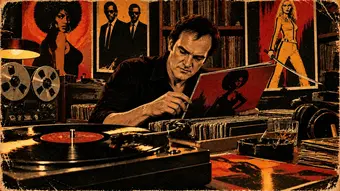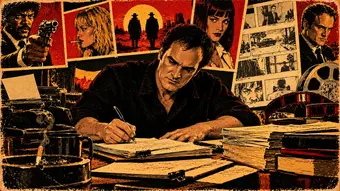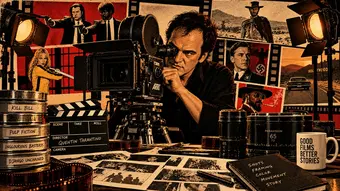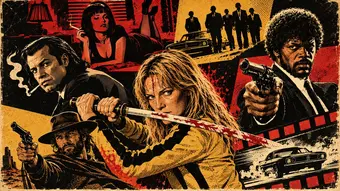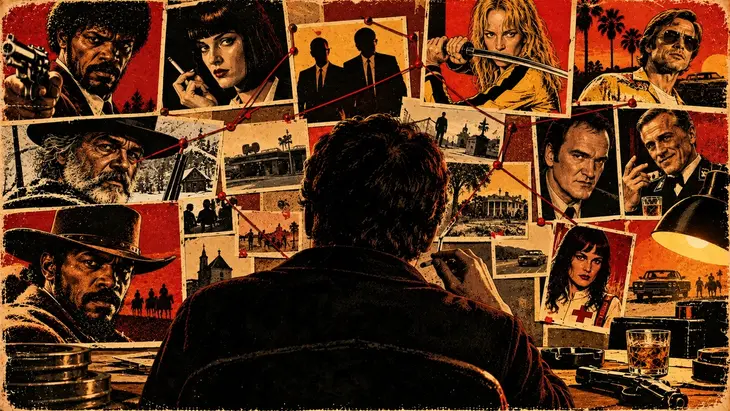
Tarantino’s universe invites viewers to notice details that recur across stories: surnames, fictional products, places and ways of representing cinema. The significance of these coincidences depends on what kind of connection they support. A family relationship explained by the director provides information about two characters; a shared brand makes a setting recognizable; a resemblance between scenes can prompt a comparison of style. Each discovery answers a different question.
Red Apple and Big Kahuna Burger make it possible to trace fictional products as they circulate between films. Tarantino’s explanation of two levels of fiction adds to these examples: a world inhabited by certain characters, and the films those characters might watch. The idea adds depth to the play of references, but needs context when applied to a specific work.
Chronology adds another complication. The period depicted, the release date and a scene’s place within the story describe different relationships. Keeping them separate helps viewers enjoy the connections without attributing more information to a detail than it contains.
A connection between films may be stated in dialogue, explained in an interview or suggested by comparing images. The strength of the conclusion depends on that evidence. Recognizing a repetition is the first step; establishing what it means requires attention to its context and to the limits of what is actually claimed.
The two levels of fiction explained by Tarantino
In January 2016, during an interview on The Project covered by Shortlist, Tarantino distinguished between a realm he called realer than real and another made up of films within that world. His explanation of Tarantino’s two universes included an example: the characters in Reservoir Dogs or Pulp Fiction might go to the cinema to see Kill Bill or From Dusk Till Dawn.
The proposal describes a relationship between levels of fiction. It suggests that one film represents the everyday experience of certain characters, while another belongs to their cinematic imagination. The statement offers this model and a few specific examples; applying it to every work, advertisement, sequel or brief appearance requires further support. A complete classification would involve decisions that the 2016 explanation leaves open.
It is also worth distinguishing this interplay from Tarantino’s dialogue and narrative structure. A character may tell a story, recall an episode or describe a film. Their words have a different status in each case: a memory is presented as personal experience, while an invention may be intended to persuade or impress the listener.
Brands and characters: what each connection proves
In a 2014 interview with CraveOnline, published in Mandatory, Robert Rodriguez explained that he and Tarantino used fictional products created by the other. He identified Red Apple and Big Kahuna Burger as Tarantino creations. This circulation provides visual continuity: a box or logo can seem familiar even when the protagonists and the story’s genre change.
Rodriguez mentioned the burgers in Pulp Fiction and the ones carried by George Clooney’s character in From Dusk Till Dawn. The example documents a brand being shared. The relationship between the characters would require its own evidence. The product may serve different purposes in each scene: accompanying a conversation, defining a taste or adding a recognizable detail to the set.
The connection between Vic and Vincent Vega is supported by testimony from the director. In remarks to Opie and Anthony reported by SlashFilm in April 2007, Tarantino discussed bringing them together in a story called Double V Vega. This idea documents his intention to connect them; the adventures imagined for that project have a different status from the events shown in his films.
Recurring surnames raise a different issue when there is no equivalent statement. A coincidence makes it possible to propose a hypothesis and look for evidence, but a family relationship requires more than a shared name. In the theory about King and Paula Schultz, for example, each proposed family relationship must be distinguished from simply recognizing the surname. A family tree adds relationships and dates that each need individual support.
Chronology, geography and parallels
The chronology of Tarantino’s universe requires separating the release year, the period depicted and the order in which events are told. A flashback within a film changes what the viewer knows. Placing two stories in successive periods lets us order them chronologically; the existence of continuity between their characters requires other evidence. Fictional alterations to history must also be interpreted within the work that presents them.
Tarantino’s geography combines fictional places with locations used for filming. Sharing a city makes it possible to compare settings, movements and ways of representing power. To connect organizations or characters, the story needs to establish that relationship. A place name alone is not enough to reconstruct a precise route if the editing omits distances or combines different locations.
The parallels between Cliff Booth and Stuntman Mike invite comparison of how film stunt performers are portrayed. Sharing a profession can illuminate themes such as physical skill, reputation or the distance between work and spectacle. This reading is useful for the similarities it identifies, even if it does not establish a shared biography. Continuity analysis and thematic comparison raise different questions about the same images.
The format in which a clue appears affects what it can verify. A spoken surname, a name written in the credits and a sign on the set provide different kinds of evidence. A transcript should preserve the visible spelling when available; audio can leave room for doubt that subtitles resolve through a translation choice. The original version and the linguistic adaptation should be identified separately.
An isolated excerpt can also lose relevant information. The preceding line can reveal whether someone is serious, telling an anecdote or trying out a false identity. A screenshot shows an object, but the full scene clarifies who uses it and how important it is. Its presence on screen is verifiable; its interpretation depends on context.
The same applies to scripts. A written scene may change or disappear during production. Identifying the document’s version makes it possible to describe a writing intention without automatically transferring it to the released cut. Preserving this distinction helps explain both the connections that remain and the possibilities that did not make it into the film.