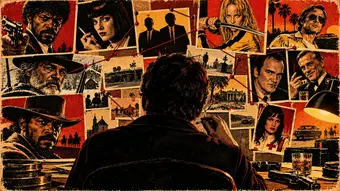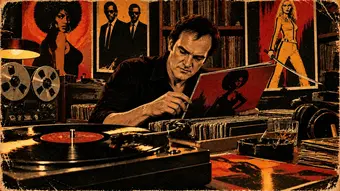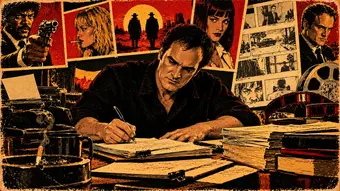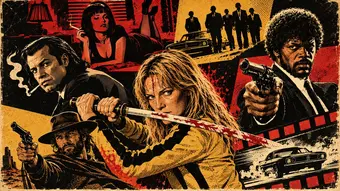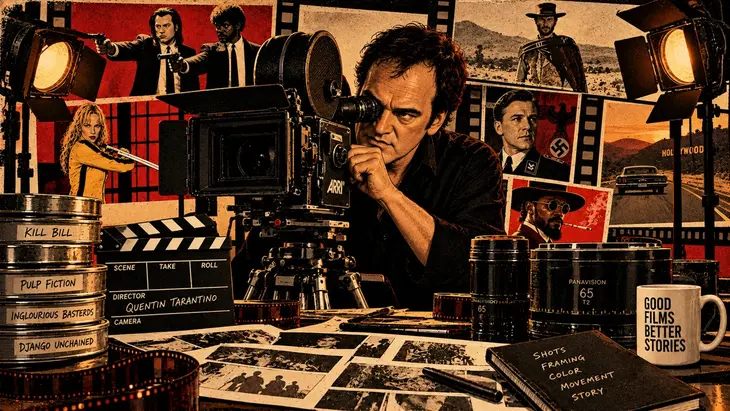
Quentin Tarantino’s visual style directs attention through camera positions, changes in scale, and relationships between bodies and spaces. A character can dominate the image from a low angle or remain exposed within a wide frame. Distance has no fixed effect: moving closer lets us observe a reaction, but can also conceal what is happening around it. The shape of the shot determines what information we share with the protagonists and what we can notice before they do.
Movement, lighting and editing complete this distribution. A slow push-in changes the intensity of a conversation; a cut can reveal a threat or delay the answer we’re waiting for. Colour and costume help distinguish figures within a composition, while focus establishes relationships between different areas of the image. These elements work together. The result depends on the dramatic situation and the coordinated work of direction, cinematography, design and editing, with solutions that vary from film to film. The breadth of a confined western and the intensity of a criminal confrontation call for different ways of making danger visible.
Images in Tarantino’s films manage power dynamics and the amount of information on offer. An isolated face lets us focus on a moment of hesitation; several characters in the same shot make us divide our attention. The choice depends on the conflict and can change over the course of a scene. Style emerges from this organization, as well as from recognizable techniques such as low camera angles, abrupt changes in scale and compositions featuring intense colours.
Framing and focus: where to look within the shot
The trunk shot places the camera low, facing characters who are looking into the car. The edge of the space and the direction of their gazes create a specific relationship between those who are watching and what they are watching. Its effect depends on the context: the position can give a group a strong presence, create curiosity about what it conceals, or introduce a sense of vulnerability.
The overhead shot offers a different spatial arrangement: the camera looks straight down. This perspective lets bodies, objects and paths be arranged as parts of a surface. By contrast, a canted frame alters the orientation of lines within the image. Neither technique implies a single emotion on its own; its relationship to movement, performance and the surrounding shots determines the effect.
The split-diopter focus keeps two areas at different distances in sharp focus by using a partial optical attachment. In the June 2019 issue of American Cinematographer, Jay Holben cites Reservoir Dogs as an example. The technique creates two distinct planes of focus, with a transition that can be visible. It lets a nearby element relate to a distant one without bringing the entire intervening depth into sharp focus.
Movement and format: changing position or scale
A zoom changes the lens’s focal length and the field of view. A camera move physically shifts the camera and changes its position relative to the elements in the scene. The explanation of American Cinematographer on camera-movement tools distinguishes a dolly move from its possible combination with a zoom. A crash zoom speeds up the change in scale to create a visual accent; a physical push-in also changes perspective relationships.
The relationship between a long take and a tracking shot requires us to distinguish duration from movement. A long take sustains a dramatic unit without visible cuts and can include a stationary camera. A tracking shot can be brief. Steadicam refers to a stabilization system, not a particular duration. On screen, a tracking shot lets us discover a space while following the character moving through it.
In his 2019 conversation with Scorsese, published by the DGA, Tarantino credited Josef von Sternberg with the dolly tracking shot past foreground set pieces, a technique he recalled using in Inglourious Basterds. The set dressing adds layers of depth as the camera moves.
American Cinematographer documents the use of 65 mm negative, 70 mm prints and a 2.76:1 image in The Hateful Eight. The capture medium, exhibition format and frame proportions describe different choices. The wide frame allows several reactions to be set against one another at the same time.
Lighting, design and editing: building visual continuity
Lighting determines which parts of a space are revealed and how faces stand out from the background. Tarantino’s use of colour also incorporates sets and clothing: the dark suits in Reservoir Dogs establish a group identity, while the Bride’s yellow outfit in Kill Bill sets her apart visually from many of her opponents. Costume and character identity thus shape how we immediately read the frame.
A shift to black and white can break that colour continuity and change the experience of a sequence. The effect is related to where it appears and to the images around it. The same visible choice does not always indicate the same production motive or the same meaning in relation to time.
Editing determines how long a reaction lasts and what information the next shot provides. A scene can alternate between the face of the person asking a question and the person who needs to answer, or keep them together so that the tension depends on both. Tarantino’s technical crew coordinates these possibilities from the shoot through to the edit; lighting and design make the elements legible so that editing can ultimately connect them.
Words printed on screen are also part of the image. In Kill Bill, the chapter cards interrupt the flow of action and name the section that is beginning. Their appearance creates a distinct pause, with its own duration and visual weight before the characters return to the screen.
The size, colour and placement of a letter can create a sense of solemnity, energy or popular spectacle. Typography shares the frame with faces, objects and backgrounds, or replaces them for a few seconds. This shift moves us from watching an action to reading information, changing the rhythm of our attention.
Credits also present names and responsibilities through a graphic arrangement. Their informational purpose works alongside the music and the tone of the opening. When text appears over a moving shot or against an empty background, it proposes a different relationship between reading and movement. A film’s visual identity also begins to take shape through these choices.