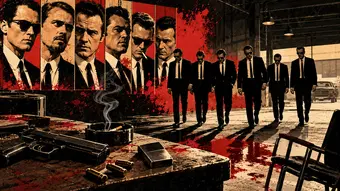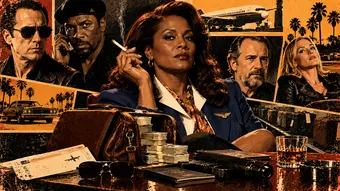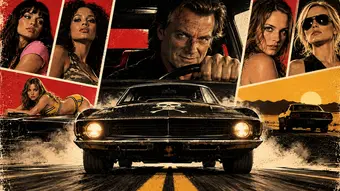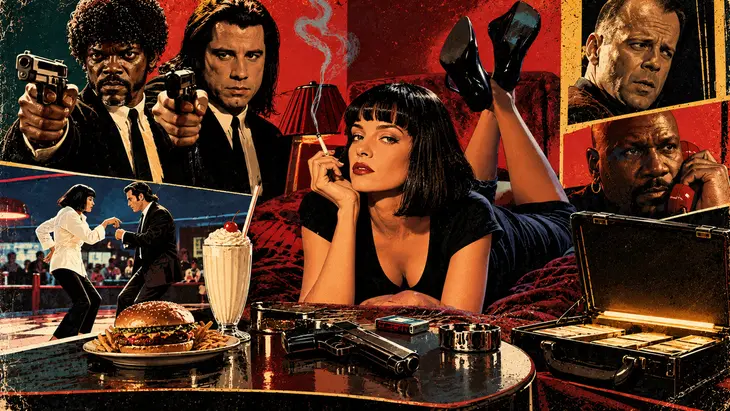
Pulp Fiction brings together stories about criminals, an awkward date, a boxer and several unexpected events that put the idea of having a situation under control to the test. Its characters try to carry out jobs or protect their personal interests, but a conversation, a distraction or an impulsive decision changes the course of the day. The film gives these detours as much space as the criminal conflicts surrounding them.
The editing changes how we relate to the people on screen. We might first see a consequence, then the moment that makes it understandable; someone pivotal in one episode takes a secondary role in another. This structure sits alongside a close attention to food, clothes, songs and objects: things the characters use, remember, want or need to get back. The film’s world becomes familiar through these everyday activities, even when violence erupts without warning. Its dialogue sustains this balance: it entertains, delays action and reveals disagreements that will matter more than they first seemed to.
Pulp Fiction brings several crime stories together through encounters that seem incidental but end up having decisive consequences. Vincent Vega and Jules Winnfield work for Marsellus Wallace; Mia, Marsellus’s wife, spends a night with Vincent; and boxer Butch is trying to sort out his own situation. The relationships between these figures offer an initial point of reference, though the film keeps the order and timing of their intersections to itself.
Episodes that illuminate one another
The narrative combines an opening in a restaurant with substantial sections devoted to Vincent and Mia, the gold watch and the situation with Bonnie. Each episode has its own immediate problem, pace and relationship with danger. This independence allows a night out, a family memory and a domestic crisis to belong to the same story without needing one protagonist to be present in every scene.
The gold watch episode puts an inherited object at the centre of Butch’s decisions. The narrative links a material possession with family memory and an obligation that cannot be measured in money alone. The Captain Koons monologue establishes this burden before its consequences take over the action. The object matters because a story has given it particular value for the person who keeps it.
In the situation with Bonnie, solving an urgent problem depends on timing, space and help from others. The tone can shift from menace to practical discussion without erasing what has happened. This ability to bring everyday activities and violence together connects with Tarantino’s dialogue and narrative structure: talking does not necessarily interrupt the conflict; it can become a way of dealing with it.
The chronological order of Pulp Fiction lets us reconstruct the sequence of events, but the editing offers a different experience. The position of each episode changes how important its characters and decisions seem to us. The circular structure of the diner scene makes use of the difference between remembering a situation and returning to it with new information. The ending therefore takes on a meaning that depends on more than simply which event happens last.
Characters, dialogue and objects charged with meaning
The cast listed in the Cannes entry brings together John Travolta, Samuel L. Jackson, Uma Thurman, Ving Rhames and Bruce Willis. Their performances distinguish different forms of authority and vulnerability. Vincent tries to seem relaxed; Jules can command a room with his voice. When the two talk in private, their differences come through in interruptions, clarifications and disagreements about what they have just experienced.
The briefcase introduces a different kind of attention. The film highlights the reactions it provokes while limiting what we know about its contents. Theories about the Pulp Fiction briefcase arise from this absence, but a conjecture does not become a confirmed fact just because it is intriguing. Within the story, the object shapes jobs, journeys and risks; its dramatic function holds up without the viewer needing to settle on a definitive literal explanation.
Speech also depends on who is listening. An intimidating speech does not have the same effect on a victim as it does when it is reconsidered among colleagues. The film explores the distance between repeating a formula and deciding what it means. The choices that emerge from this reconsideration are part of the ending of Pulp Fiction and the resolution of its stories, which relies on preserving the connections between the episodes.
Music, physical presence and recognition
The soundtrack edition released by Interscope includes Misirlou, by Dick Dale and His Del-Tones, and You Never Can Tell, by Chuck Berry. The first accompanies the opening credits; the second plays during Mia and Vincent’s dance. The two moments show how much the role of music in Tarantino’s cinemacan vary: one track drives the entry into the fiction, while another becomes part of an activity shared by the characters. In the dance, the performers’ bodies alternate between imitation, initiative and distance in a space made for them to be watched.
The Academy of Motion Picture Arts and Sciences awarded the original screenplay prize in 1995, for writing by Tarantino and stories by Tarantino and Roger Avary. The award recognises writing, a category distinct from directing or editing. The record distinguishes the screenplay from the stories that gave rise to the episodes, an important point in recognising the contribution of both writers.
The settings in Pulp Fiction often serve everyday purposes that the criminals cannot simply suspend at will. A restaurant still has to serve meals, a home has its routines, and a bathroom remains somewhere someone can be absent for a few minutes. Criminal activity has to contend with schedules, physical needs and objects that were not designed for its problems.
This materiality explains some of the humour. A character can speak as if they are in control, then discover they depend on clean clothes, a car or someone else being available. Prestige within an organisation does not automatically solve a domestic inconvenience. The film uses this shift in scale to show the awkward work that remains after a spectacular act.
Familiar places also make the arrival of violence more abrupt. The viewer recognises how a conversation between restaurant tables or a visit to someone’s home should work. When that order is disrupted, the scene retains enough everyday detail to make the rupture feel close and unpleasant, even when it maintains a comic tone.