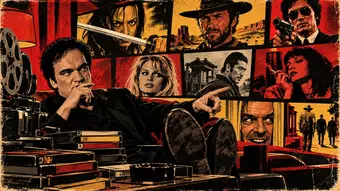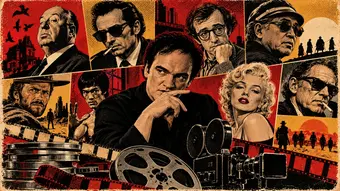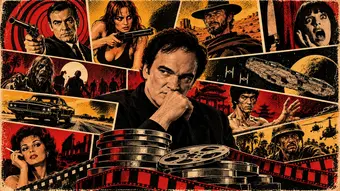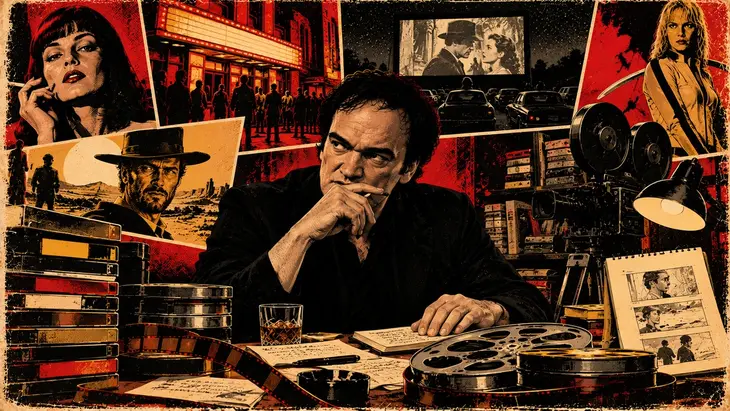
Quentin Tarantino pursues film criticism through writing, conversation and exhibition. Each form offers a different way to engage with a film. An essay can connect the memory of a first viewing with a later assessment; a review focuses on a work’s strengths and shortcomings; a conversation brings in the questions or disagreements of other viewers. Programming a screening adds the opportunity to share films on a screen and in a particular order.
These projects also involve different participants and responsibilities. A byline identifies the author of a text. A podcast can bring together several speakers and have its own production team. A theatre needs to select films and have the prints and equipment required to screen them. Recognizing these differences helps clarify what Tarantino contributes to each activity and what work belongs to others.
What makes this side of his work interesting is the reasoning he offers for appreciating film: how he argues for a preference, what becomes visible when films are compared, and how he turns a personal passion into an experience others can read, listen to or share.
Written criticism and programming a theatre begin with different decisions. One develops an argument about images and sounds; the other creates the conditions for experiencing them again. In Tarantino’s projects, both activities coexist with the spoken exchange that defines a podcast.
An essay and a review offer room to focus on a film
Hachette dates the publication of Cinema Speculation to November 1, 2022, and describes it as a journey through American films of the 1970s that Tarantino watched in his youth. In the essay Cinema Speculation, personal memory and film criticism intersect. This context explains its selective nature: the films are part of a viewer’s experience, from which an interpretation of an era takes shape.
In an essay like this, memory and argument serve different purposes. Recalling a film’s impact situates the writer’s personal relationship with it; examining a scene makes it possible to discuss how it achieves that effect. Readers may be interested in the memory and disagree with the assessment. Critical commentary becomes productive when it offers reasons that another person can weigh against what happens on screen.
The reviews written by Tarantino can take a more focused approach. In his piece on The Dynamite Brothers, published by the New Beverly on April 1, 2020, he expresses general reservations about Al Adamson’s films while also defending this particular one. The assessment grows out of that exception: the specific work calls for a reassessment of an expectation about its director. It’s an example of nuanced judgment within an enthusiastic critique.
Video Archives: films discussed in many voices
Gala Avary explained the format of The Video Archives Podcast in a public announcement on December 14, 2024. Quentin Tarantino and Roger Avary talk about films they watched on videotape at the former Video Archives; she takes part as producer and reporter, alongside producer Josh Richmond. In the same post, she also discussed the move of the second season to Patreon, linking it to greater independence in choosing films and to the relationship with listeners.
Starting with specific tapes gives the discussion a shared focus. Participants can recall their impressions and talk about what they’ve just watched again. The conversation also preserves the distinction between voices: a statement by Avary or an observation by Gala doesn’t become Tarantino’s opinion simply because it’s part of the same show. Disagreement can draw attention to a scene or interpretation that an individual contribution had overlooked.
On a podcast, the selection of films and the time spent discussing them help define the episode. This sets it apart from a promotional interview, which is shaped by the questions and the reason for the appearance. Tarantino’s film conversations and interviews can expand on an explanation when someone asks him to spell out a comparison, recall a sequence or clarify why he finds an interpretation convincing.
New Beverly and Vista: exhibition as a cinephile pursuit
The official history of the New Beverly Cinema dates the theatre’s conversion into a repertory cinema by Sherman Torgan to 1978. It also records the start of Tarantino’s programming in October 2014 with a Paul Mazursky double feature: Bob & Carol & Ted & Alice and Blume in Love. Pairing two titles invites audiences to compare them during a single visit while preserving each film’s distinct identity.
The Vista Theatre broadens its exhibition program. In its August 21, 2026, feature, Discover Los Angeles documents Tarantino’s purchase of the theatre in 2021 and its reopening in 2023. The cinema’s official website, consulted on October 18, 2026, lists screenings in 35 mm or 70 mm. Those formats describe the conditions of presentation; a film’s appearance on the schedule is not, by itself, a personal review by its owner.
The New Beverly’s history credits Tarantino with the decision to screen exclusively on film prints. This is a concrete expression of his defence of celluloid. The projection medium, the preservation of a print and the conditions of a screening are related but distinct matters. Choosing a film for a theatre expresses a preference in programming; assessing the result also means considering the image and sound the audience experiences at that screening.
Appearing as a guest offers another way to share ideas about film. On April 1, 2020, the New Beverly announced Tarantino’s appearance on Pure Cinema Podcast, alongside Elric Kane, Brian Saur, Julie McLean and Phil Blankenship. The discussion focused on film, criticism and the series of reviews he had written for the theatre’s website. The episode brought a body of work first developed in writing into conversation and opened it up to questions from other participants.
Moving between media can bring new objections or connections to an argument. In a review, the author controls the entire order of the presentation; with other speakers, a question can pause the discussion at a detail the author had taken for granted. For listeners, the insight comes through that process: an initial idea becomes more precise as the speaker explains what an actor does, how a scene is structured or why a comparison with another film is relevant. The value lies in following that explanation and weighing its reasoning.